
La Française — Authentic French Château Windows
Few elements define a home the way the French casement does. Tall paired sashes that open inward like doors, a slender center astragal held by a cremone bolt, a frame and sash that sit perfectly flush — this is the window of the French château, the Provençal manor, and the country estate. At Chablais we call it La Française, and we source it the way it was meant to be made: in premier European workshops, by hands that have made these windows for generations.
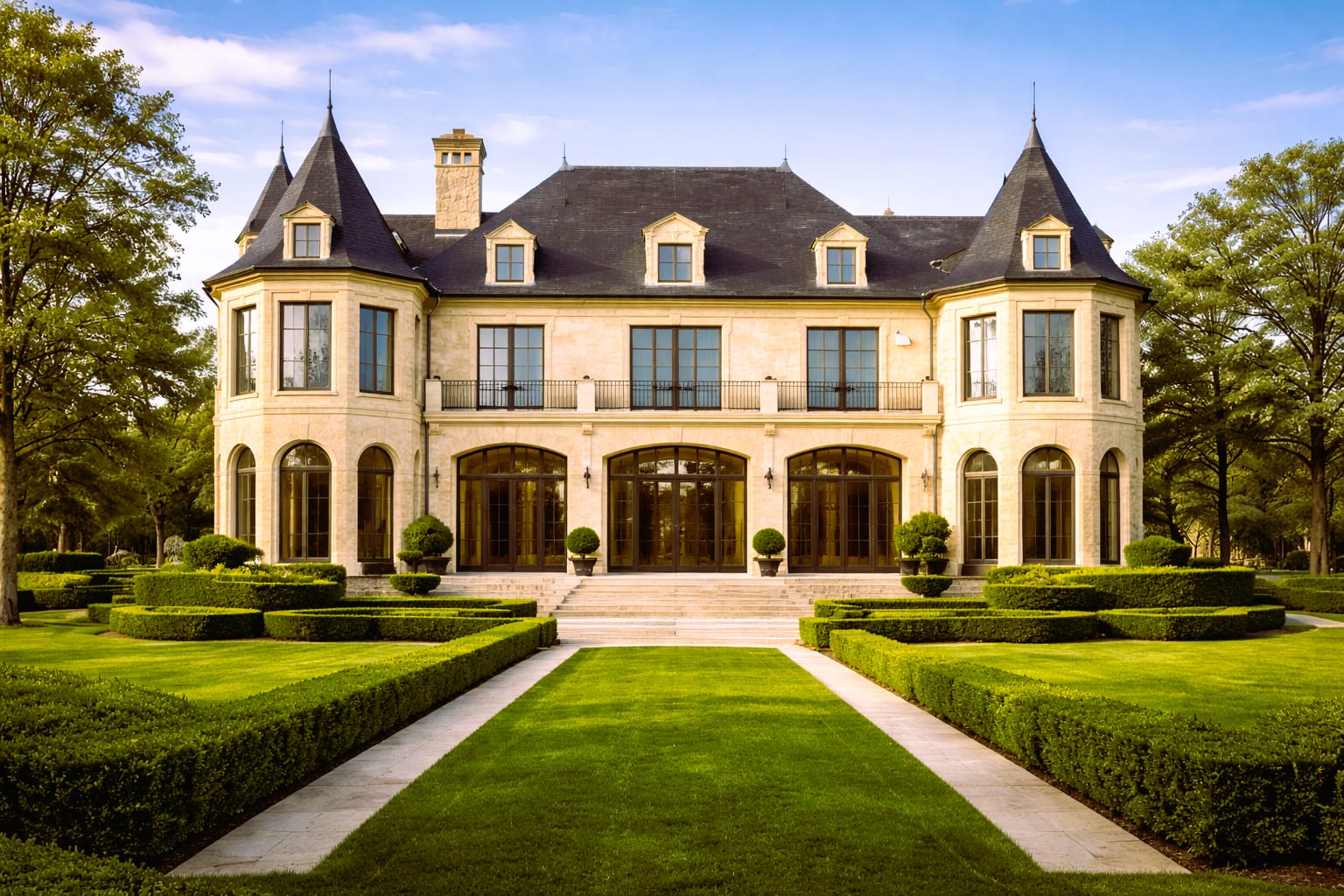
Whether you are building a new château-inspired home or restoring the character of an older one, La Française brings the proportions, the detail, and the quiet authority of true French design — custom-made to your exact specification, and delivered and supported here in the United States.
Specifications
- Mahogany, walnut, oak, and other timbers available
- Sash and frame depth: 2 11/16″
- Full-perimeter weatherstripping
- Custom jamb extensions to your specification
- Hidden custom roll screens available
- Simulated divided lites
- Waterproof adhesive on all joints
- Full-perimeter, multi-point locking hardware
- Solid brass lever operation, with finish options
- Integral friction sash stay
- Fully adjustable European hinges
- Bronze-clad and aluminum-clad exteriors available
- Steel with cremone bolt

What makes a true French casement
A standard casement is a single sash on a crank. A true French casement — à la française — is something else entirely. Two sashes meet in the center with only a narrow astragal between them, and when both open you get a full, unobstructed opening, like a small set of French doors. There is no bulky center post breaking the view.
The detail that gives the style its soul is the cremone bolt. A century ago, the cremone rod ran the full height of the window and turned to lock it tight, top and bottom — it was how a tall French window stayed sealed against the weather. Today, with concealed multi-point locking driven by the lever, the cremone often becomes a decorative element: the rods stay fixed, the beauty stays, the performance is modern. Either way, it is the unmistakable signature of the form.
The proportions trace back to the mid-18th century and the façades of Versailles — the gueule de loup meeting rail where the two sashes interlock, the espagnolette and cremone hardware, the divided lites. La Française carries all of it: the flush frame and sash, the slim sightlines, the simulated divided lites, and your choice of inswing or outswing. The rails and stiles are essentially the same whether you are building a window or a full French door, so the language reads consistently across an entire elevation.
Our French casements serve homeowners and architects across the US, including those transitioning from other European suppliers.

Materials, finishes, and configurations
La Française is fully custom, and the material is yours to choose:
- Solid wood — mahogany, walnut, oak, and other timbers, with a natural warmth that suits traditional and country interiors.
- Wood + aluminum — the interior beauty of wood with a low-maintenance clad exterior built for the weather.
- Wood + bronze — solid bronze cladding that develops a living patina over time, for the most exceptional estates.
- Custom steel — slim steel sightlines with an authentic cremone bolt.
Every unit is made to your sizes, with custom jamb extensions, simulated divided lites, hidden roll screens, and a full range of hardware finishes. Inswing or outswing, window or matching French door — the configuration follows your architecture, not the reverse.

A window for château, manor, and country homes
La Française belongs anywhere French design sets the tone — a château-inspired estate, a Provençal or French Country home, a Normandy-style residence, or a modern farmhouse that wants real character at the window line. Chablais has delivered custom French windows and doors on projects in California, Texas, New York, and across the US.
If you are working from a reference image — a château you love, a manor you are recreating — that is exactly where we like to start.
Why homeowners choose Chablais for French windows
A builder’s eye, not a sales desk
Chablais was founded by a builder. Our founder carved wood as a boy and went on to build an entire house by hand — the roof, the finishes, and the windows themselves, made and installed with his own hands — before spending more than twenty-five years in European fenestration. That background changes how a project is run. We read a shop drawing the way the workshop will read it. We catch the details that go wrong before they go wrong. And we hold every window to the standard of someone who has actually made one.
The right workshop for your project — French oak when it matters
We are not a single factory selling one catalog. Chablais sources each La Française window from the European workshop best suited to your design, your performance needs, and your budget — including French-made, in solid French oak, when provenance is part of the brief. That freedom is the point. It lets us give you exactly the right window rather than the only one a factory happens to make: solid wood in mahogany, walnut, oak and more; aluminum-clad or bronze-clad exteriors; or custom steel with a true cremone bolt. One partner, the full range.
Personal service, from first sample to final install
Chablais is hands-on from the first conversation. We bring samples to you — so you can see and feel the wood, the finish, and the cremone hardware in your own home, in your own light, before you commit to anything. From there we manage the entire path: specification, custom fabrication, ocean freight, customs clearance, and coordination through to installation. The complexity of importing from Europe is ours to carry, not yours — so when your windows arrive, they arrive correct.

French casement windows — common questions
What is the difference between a French casement and a standard casement? A standard casement is one sash on a crank with a fixed center post when paired. A true French casement is two sashes that meet at a narrow astragal and open together for a clean, full opening — no post in the middle, and the authentic flush frame of the French original.
Should I choose inswing or outswing? Both are available, and the right answer depends on your interior space, window treatments, and how each opening relates to the room. We will walk through it with you for each position — it is one of the details a builder’s eye is useful for.
What materials can I have? Solid wood (mahogany, walnut, oak and more), wood with an aluminum-clad or bronze-clad exterior, or custom steel — all with the true cremone-bolt detail.
Where are your windows made? We source each window from the European workshop best suited to it. For a true inswing/outswing French casement, the leading European ateliers are working at the very top tier for exactly this hardware and joinery — the same craftsmanship as France, at the right value. When a project calls for French-made specifically, in French oak, we do that too.
Do you deliver across the United States? Yes. Chablais handles freight, customs, and delivery to projects anywhere in the US, and stays personally involved in coordinating the installation.
Can I see the design before I commit? Yes — we will prepare a proposal and drawings for your specific openings so you can see exactly what you are getting before anything is built.


Bring La Française to your home
Tell us about your project — a few photos or drawings and the look you are after is enough to start. We will help you choose the material, the configuration, and the right path for your budget, and prepare a proposal built around your home.