
SPECIALTY GLASS & Divided Lites
Glass is what you look through every day, and it is also the first thing people see from the street. On an old house the glass was never perfectly flat. It had soft waves, small bubbles, sometimes lead lines or a pattern, and it was divided in small panes by wood muntins. That is why an old façade looks alive when the light moves on it. We bring this character back on new, high-performance windows and doors: restoration glass, seeded glass, leaded glass, frosted and patterned glass, digitally printed glass – and the right type of divided lites for your project, from true divided lites to simulated divided lites with a spacer bar.
Specifications
- Restoration glass, light or heavy waves
- Seeded glass with small air bubbles
- Leaded glass and stained glass panels
- Frosted, reeded and patterned privacy glass
- Digitally printed decorative glass
- True divided lites (TDL), muntins 1-9/16″ and wider
- Simulated divided lites (SDL) with spacer bar, 5/8″ to 1-9/16″
- Grilles between the glass (GBG)
- Ogee, putty or custom muntin profiles
- Double or triple insulated glass, Low-E, argon
- Tempered or laminated safety glass where required
RESTORATION GLASS
 THE GENTLE WAVES OF 19TH-CENTURY GLASS
Options
– Light or heavy distortion
– Double or triple insulated glass
– Laminated or tempered versions
SEEDED GLASS
 SMALL AIR BUBBLES, LIKE EARLY HAND-MADE GLASS
Options
– Light or heavy seed
– Clear or antique tint
– In double or triple insulated glass
LEADED GLASS
 DIAMOND, SQUARE OR CUSTOM PATTERNS IN LEAD CAME
Options
– Clear, seeded, beveled or colored glass
– Sealed inside insulated glass
– Custom stained glass on request
PRIVACY GLASS
 LIGHT IN, VIEW OUT: FROSTED, REEDED, PATTERNED
Options
– Acid-etched or sandblasted frost
– Reeded, fluted and hammered patterns
– For baths, stairs and entry doors
Printed Decorative Glass
Digital printing is the modern way to make a decorative glass. The design is printed directly on the glass – a frosted-look ornament, a classic French border, a monogram, or a pattern that matches your ironwork – and then the glass is tempered. Every line is precise, in any size and any pattern, and the printed glass can be assembled in double or triple insulated glass. It is a beautiful solution for entry doors, sidelights, transoms and bathroom windows, where you want privacy without losing the light.
Send us a drawing, a photo of an old door or even a fabric pattern. We can turn it into your own glass design.

Old Glass, Modern Performance
Specialty glass does not mean single pane. Restoration, seeded, leaded and printed glass can all be assembled in double or triple insulated glass, with Low-E coating and argon gas, laminated for security and sound, or tempered where the building code asks for safety glass. You keep the look of the past with the comfort of today. Mouth-blown glass is made in limited sizes, so for very large panes we check the possibilities with you on the shop drawings, before production.
Divided Lites: Three Ways to Divide the Glass
Divided lites (also called muntins, grilles or grids) give a window its proportion and its period. There are three ways to make them. From far away they can look the same, but up close and in the reflections, the difference is real.
Separate panes of glass, each one held by a real wood muntin. The most authentic, as on the original windows.
One insulated glass unit, wood bars glued outside and inside, and a black spacer bar between the panes, aligned with the bars.
A flat aluminum grid sealed inside the insulated glass. Smooth glass on both faces, but no relief and no shadow.
| True Divided Lites | Simulated Divided Lites | Grilles Between the Glass | |
|---|---|---|---|
| How it is made | Separate panes held by solid wood muntins | One insulated glass unit, wood bars glued inside and outside, spacer bar between the panes | Aluminum grid sealed inside the insulated glass |
| Look up close | The most authentic, each pane reflects on its own | Very close to TDL, with real shadow lines | Flat, no relief |
| Muntin width | From 1-9/16", one piece of wood up to 5-1/2", two pieces above | Slim, from 5/8" to 1-9/16" | Only a thin bar inside the glass |
| Energy performance | Very good | Excellent | Excellent |
| Historic districts | The reference | Often accepted with spacer bar and fixed exterior bars | Usually not accepted |
| Repair | One small pane at a time | Full insulated glass unit | Full insulated glass unit |
| Best for | Landmark restoration and purists | Most classic and French-style projects | Modern or budget-sensitive projects |
True vs. Simulated Divided Lites: What Really Changes
The Look From the Street
With true divided lites, each small pane reflects the sky at its own angle, like on an old house. A well-made SDL with a dark spacer bar between the panes gives the same shadow lines and is very close, even from a few feet away. Grilles between the glass look flat – no relief and no shadow.
Muntin Width
With old single glass, muntins could be very thin. With insulated glass, a true divided lite needs a wider muntin to hold each small insulated pane. Our SDL bars go from 5/8″ to 1-9/16″ – the slim, historic proportion. From 1-9/16″ and wider, we make true divided lites, in one piece of wood up to 5-1/2″, and in two pieces above that.
Energy Performance
One large insulated glass unit has less glass edge than many small ones, so SDL windows usually perform a little better. True divided lites with insulated glass still reach a very good performance – the choice is more about look and budget.
Historic District Approval
Many landmark commissions, and the National Park Service guidelines, can accept SDL when the exterior bars are permanently fixed, match the original profile and have a spacer bar between the panes. Some districts ask for true divided lites. We prepare shop drawings with the muntin sections for your submission. More on what each city requires: landmark and historic district wood windows.
Repair and Maintenance
If a pane breaks on a true divided lite window, only that small pane is replaced. On SDL and GBG windows, the full insulated glass unit is replaced. Grilles between the glass are the easiest to clean, since both glass faces stay smooth.
Profiles Inside and Out
Outside, the putty profile recalls the old putty-glazed windows. Inside, the ogee profile gives the soft molded line of a French window. We can match inside and outside or mix them, and we can copy the muntin profile of your existing windows.
Specialty Glass Options
– Restoration glass, light or heavy distortion.
– Seeded glass, light or heavy seed.
– Leaded and stained glass panels.
– Beveled glass for doors and transoms.
– Frosted, reeded, fluted and patterned privacy glass.
– Digitally printed decorative glass.
– Double or triple insulated glass, Low-E and argon.
– Laminated glass for security and acoustics.
– Tempered safety glass where required by code.
Available On
– French doors and terrace doors.
– Single and double hung windows.
– Custom wood entry doors, sidelights and transoms.
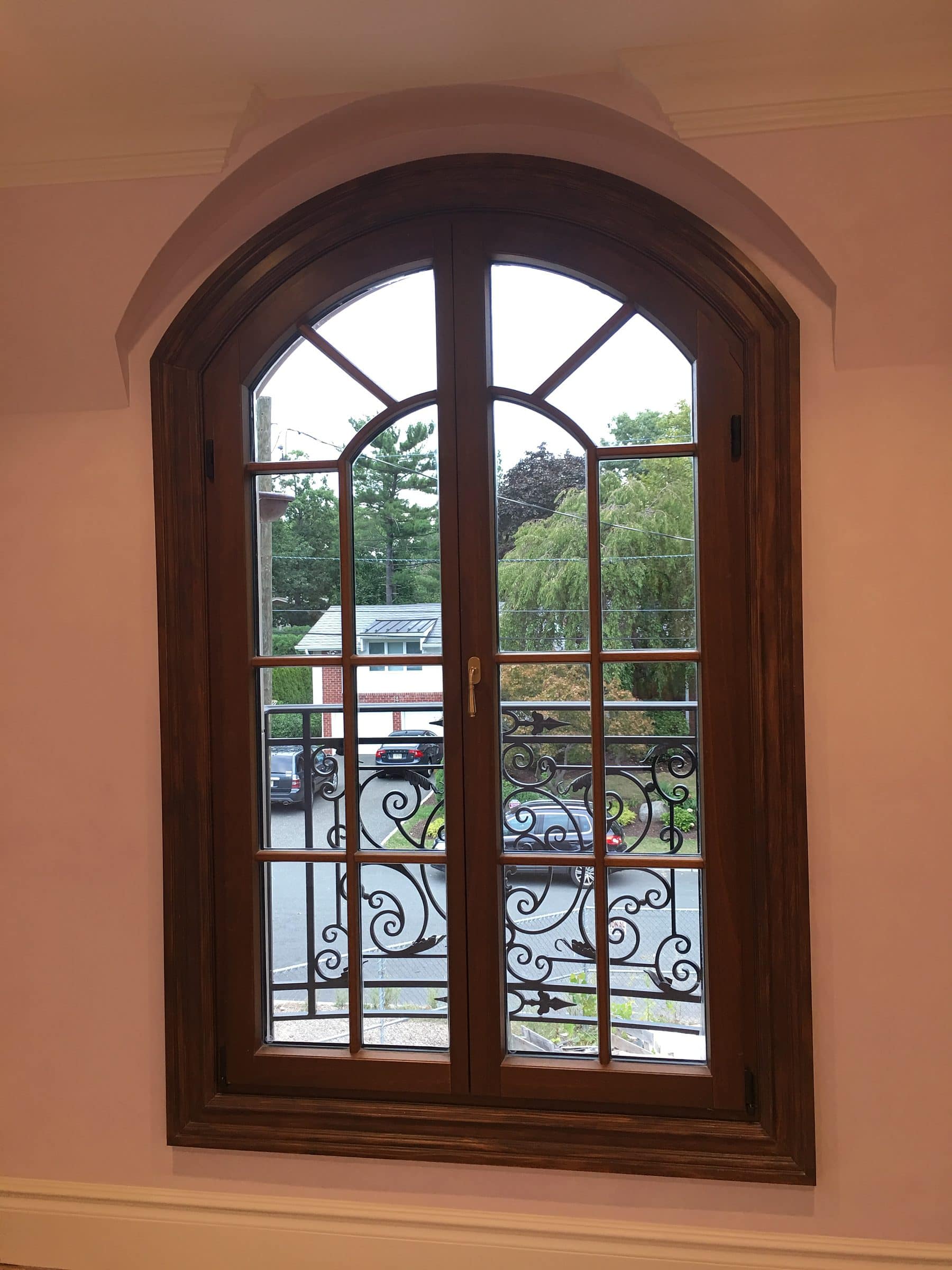
– Round top, arched and oval windows.

Where Specialty Glazing Makes the Difference
Historic townhouses and landmark districts
Brownstones and townhouses in New York, Boston, Philadelphia, Charleston or New Orleans: restoration glass and putty-profile muntins that match the original windows.
French château and Old World homes
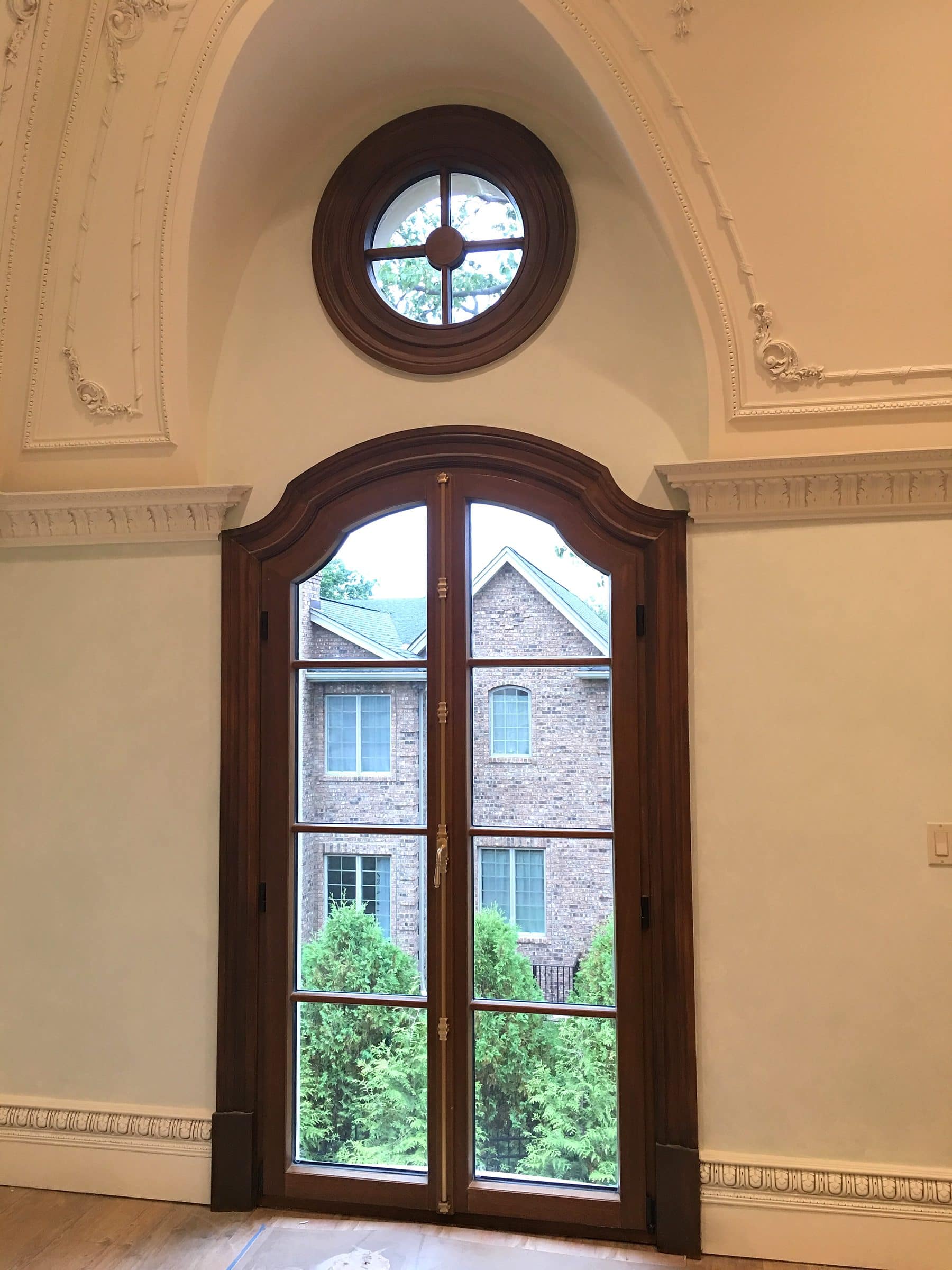
Tall French casements and French doors with divided lites, seeded or restoration glass, and a real cremone bolt.
Colonial, Georgian and Federal homes
Six-over-six and nine-over-nine windows with slim muntins and wavy glass, the classic look of the East Coast.
Entry doors, sidelights and transoms
Leaded, beveled or printed glass gives a warm welcome and keeps your privacy at the front door.
Bathrooms, stairways and street-facing rooms
Frosted, reeded or patterned glass: all the light, none of the view.
Would you like samples of specialty glass or muntin profiles?
Why Chablais for Your Specialty Glazing
Glass and muntins are the details people look at last on the drawings, and see first on the finished house. A muntin 1/8″ too wide, or a glass too flat, can change a whole façade. At Chablais we have more than 25 years in European wood windows, and we draw every muntin profile and every glass type on the shop drawings before production. We can send you real muntin samples – ogee or putty, in your wood species – and glass samples, so you can see the waves and the seeds in your own light. The glass is set in the workshop, so your windows and doors arrive glazed, finished and ready to install. And if your project is in a historic district, we work with your architect on the documents for the commission.
Glass and Divided Lites - Frequently Asked Questions
What is the difference between TDL and SDL?
True divided lites (TDL) are separate panes of glass held by real wood muntins. Simulated divided lites (SDL) use one insulated glass unit with wood bars glued on the outside and the inside, and a dark spacer bar between the panes, so the bars look continuous.
Can true divided lites have insulated glass?
Yes. Each small pane is its own insulated glass unit, set in a muntin wide and deep enough to hold it, so our true divided lites start at 1-9/16″. For slimmer muntins, from 5/8″ to 1-9/16″, SDL is the right choice.
What is restoration glass?
It is glass made the old way, blown or drawn, so it keeps soft waves and sometimes small bubbles. It gives the moving reflections of a 19th-century window, and it can go in insulated glass.
Can leaded glass be energy efficient?
Yes. The leaded panel can be sealed inside an insulated glass unit. The lead lines stay visible, the outside faces are smooth and easy to clean, and you get the performance of modern double or triple glazing.
Will my historic district accept SDL?
Often yes, when the exterior bars are permanently fixed, have the right profile and a spacer bar between the panes. Every commission has its own rules, so check with your architect – we provide the muntin sections and shop drawings they need.
Can you match the muntins of my old windows?
Yes. Send us a photo with a tape measure, or a piece of the old muntin, and we reproduce the width, the depth and the profile: ogee, putty, lamb’s tongue or your own design.